
AWARE Trust Sterilisation Programme
Zimbabwe
ARE YOU TOUGH ENOUGH?
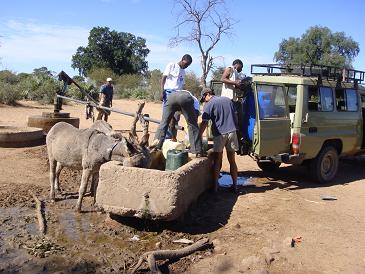
Participate with Zimbabwean veterinarians in a small animal sterilisation and health care campaign in some of the poorest areas of the country. This emotionally rewarding project opens your eyes and makes you reassess your values.
Project Location: The AWARE Trust Sterilisation Programme works in impoverished communal land villages mostly within the six Trans Frontier Conservation Areas (TFCAs) – or Peace Parks - that Zimbabwe is involved in. TFCAs usually comprise trans-border National Parks and Wildlife Areas as well as the communal land villages that they are contiguous with. The concept of TFCAs is that by including the villages in the TFCAs, they will benefit directly from increased tourism in the area, whilst appreciating the need to conserve the adjacent natural ecosystems.
Project Age Limit: Minimum 18 years, maximum age dependent on participant’s health
Project Highlights:
- Make a huge difference to an underprivileged animal’s life.
- Work with competent and professional vets in a challenging environment.
- Help bring first world veterinary care to animals that have never seen a vet in their lives.
- Experience first hand the uncut reality of living in a remote African village.
- Help educate villagers on animal welfare and conservation.
Further Information on AWARE’s Sterilisation Programme:
The biggest threat to wildlife in Southern Africa is loss of habitat through encroachment by the ever expanding human population.
AWARE believes that by educating and improving the livelihood of people living on the edge of conservation areas, this will reduce encroachment into the Parks for the purposes of subsistence poaching and harvesting wood by cutting down trees.
Most of the people living in these remote regions are extremely poor and use cattle as their main currency. Donkeys are used for draft power and dogs are mainly used for guarding goat kraals against wild predators. There are even cats to keep rodents away from stored grain. Improving domestic stock health means that people become wealthier and do not have to rely on subsistence poaching for their existence. This work therefore has a direct effect on the quality of both human and animal life.
- Sterilising female (and male) dogs:
- Prevents the birth of unwanted puppies, most of which die in the first three months of their lives.
- Prevents an already emaciated bitch from having her nutrition drained through producing puppies and lactation. Many of these bitches would otherwise starve to death.
- Prevents transmission of sexually transmitted diseases such as Transmissable Venereal Tumour (TVT).
Keeping a check on the disease status of domestic animals adjoining Parks is also important as diseases are often transmitted between domestic and wild animals and vice versa. This is particularly important for wild carnivore populations, which are vulnerable because of their relatively small sizes and susceptibility to fatal viral diseases like Distemper and Rabies. A recent outbreak of distemper in the Kgalagadi thought to originate from domestic dogs living in adjacent rural areas claimed the lives of at least 4 lions.
- Vaccinating rural dogs:
- Prevents them from getting rabies and 7 other infectious diseases which they would not be able to be treated for.
- Prevents the spread of these diseases into wild carnivore populations which can have a devastating effect on certain species.
- Prevents transmission of zoonotic diseases such as rabies to people.
Whilst performing sterilisation campaigns, blood samples are taken from the animal population in an area so that exposure to disease pathogens can be detected. Additionally, dogs are Frontlined for ticks and fleas, de-wormed, and given food to take home. Any sick dogs are examined and treated as necessary.
Working in these marginal areas provides good first hand knowledge of other threats to wildlife, which are mainly borne out of conflict with people, e.g. poisoning of hyaenas which raid goat kraals.
- Villagers are educated on animal restraint, health and welfare. They are given AWARE T-shirts if they participate in the programme, as well as educational story books with crayons to colour in pictures for the children.
Project Typical Day:
A day in the life of an AWARE volunteer on a sterilisation programme…
Days 1-7:
- Rise at dawn (between 0530hrs and 0630hrs depending on season).
- Breakfast.
- Help prepare the surgical room and veterinary equipment for the day.
- Villagers start arriving shortly after dawn. Book in the spays or castrations on a first come, first served basis. Record owner and animal details.
- Help with restraint of dogs for sedation or vaccination.
- Help the vets vaccinate, frontline, and de-worm the dogs.
- Help the vets treat any sick animal.
- After day 3, the 3 day post op check ups will also need to be seen.
- Help monitor anaesthetics and blood oxygenation during operations.
- Qualified vets or vet nurses may assist in operations.
- Monitor the animals’ recoveries post op.
- Help wash instruments, drapes, and sterilise surgical kits.
- Mid-morning: come up for a breath of air, some tea and a snack.
- Continue with the above until lunchtime.
- Lunch: when the morning work has finished!
- In the afternoon help collect water in 200l drums at a nearby manual borehole, if applicable.
- Early evening discharge the dogs with instructions for their owners and dog food.
- Hand out T shirts when villagers return for their 3 day check up.
- Dusk: Help prepare and eat dinner.
Days 8-10:
- As above but only castrations are accepted to reduce the risk of post operation complications.
- Visit local schools in the afternoons to provide conservation and animal welfare awareness.
Project Accommodation:
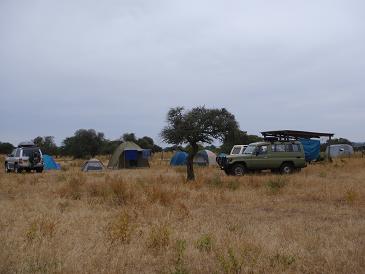
- You will most likely be camping in a two man tent with a mattress and sleeping bag. (Occasionally we may receive sponsored accommodation if we are based in a TFCA that contains a town, but this is likely to be very basic.)
NB. These are usually malaria areas and anti-malarials and mosquito repellents are critical!
- Camp will be set up near a concrete building (e.g. school) where there will likely be a ‘long drop’ toilet (with no seat) which will be kept clean by the camp orderly.
- There is usually no electricity or cell phone signal. We do have a satellite phone in case of emergencies.
- Water will have to be collected manually and stored in 200l drums at the project location. (Occasionally we may be based where there is water on site.)
- A shower tent will be erected and a solar shower bag used to dispense warm water (if needed) for your shower (these bags are about 20 litres and the water tends to come out very slowly). Generally it is hot enough that you will not need warm water to shower.
NB. There is no project accommodation upgrade!
Project Travel Nearby:
Zimbabwe is the jewel of Africa. By virtue of the Project locations, you may get to visit stunning areas of remote wilderness that adjoin communal land villages. If there is time we will happily take you for a game drive into the nearest wildlife reserve or to visit a scenic landmark (we also need a break from time to time!).
Volunteer comments:
“Making an improvement in so many animals’ pathetic lives was so emotionally gratifying that I ended up signing up for the project permanently!” Dr Vinay Ramlaul
“You will never again take anything for granted in your life. It felt so good to make a difference.” Ashleigh Erlank